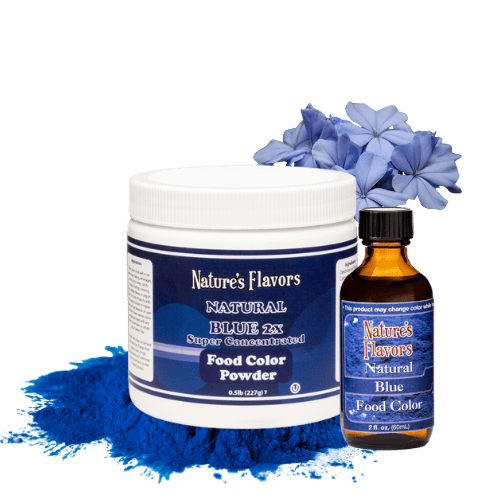
About Our Natural Blue Food Coloring
Natural blue food coloring made from gardenia gives you a vivid, saturated blue that is difficult to achieve from plant-based sources — the kind of shade many people assume can only come from a synthetic blue food dye. Because it is gardenia-derived rather than synthetic, this is a clean-label option for products that need bold blue food color without artificial colorants. In July 2025 the FDA approved gardenia blue for use in sports drinks, flavored and enhanced waters, fruit drinks and ades, ready-to-drink teas, and hard and soft candy. What sets Nature's Flavors' gardenia blue apart from our spirulina blue food coloring, the other natural blue option, is stability: it holds its color through heat, acidic recipes, and UV lights and sunlight, where spirulina tends to fade or shift. Our gardenia blue food coloring is available for everything from a single test batch to commercial production.
Natural Blue Food Coloring Without Synthetic Dyes
For brands moving away from synthetic dyes, this natural blue food dye is a straightforward replacement. As a vegan blue food coloring, our gardenia blue delivers bold color with no artificial colorants, which suits products built around clean-label and natural positioning. It is a practical choice for beverage and candy producers reformulating away from petroleum-based FD&C Blue 1 and 2 — while keeping the visual impact shoppers expect from a bright blue product. The result is a true blue food color (sometimes spelled blue food colouring) that supports a clean ingredient list.
Gardenia Blue Food Color vs. Spirulina Blue
Gardenia and spirulina are the two main natural blues, and they behave differently. Spirulina blue is well known but sensitive to heat, light, and pH, which limits where it holds up. Gardenia blue is generally more stable across those same conditions — handling heat, acidity, and light better than spirulina — which makes it a more dependable blue food coloring for many beverage and candy applications. Both are plant-based alternatives to synthetic blue food dye, but gardenia's stability is the reason many producers prefer it over spirulina where a product faces processing heat.
Using Gardenia Blue in Beverages and Candy
Gardenia blue is FDA-approved for a defined set of beverage and candy applications, and concentration lets you dial in everything from soft pastels to bold, saturated blues. Approved uses include:
• Sports drinks
• Flavored and enhanced non-carbonated waters
• Fruit drinks and ades
• Ready-to-drink teas
• Hard candy
• Soft candy
Because it tolerates heat, acidity, and light, this blue food color holds up across cold beverages and candy production alike.
FDA-Approved Natural Blue Color
Gardenia blue is one of the few natural blues to clear FDA review. The agency approved gardenia (genipin) blue as a color additive on July 14, 2025, following a petition and a review of toxicology and dietary-exposure data, for use at levels consistent with good manufacturing practice. For brands replacing a synthetic blue food coloring dye, that approval makes gardenia blue a credible, naturally derived blue food coloring backed by a formal regulatory review rather than only a clean-label claim.
Plant-Based Natural Blue Food Dye
Nature's Flavors' gardenia blue is offered as a natural blue food coloring for makers who want plant-derived color without synthetic additives. Beverage formulators building clean-label sports drinks, enhanced waters, and ready-to-drink teas, along with candy and confectionery producers, tend to reach for the natural tier when their finished product is marketed on a clean ingredient list. The practical reason to choose it here is consistency: a naturally sourced blue that still holds its color through the heat and light those products encounter.
Natural Blue Food Coloring Bulk & Wholesale
Nature's Flavors' natural blue food coloring is available in bulk with no minimum order quantity, with transparent pricing and sizing. For larger sizes, please contact us.
What Are The Best Natural Alternatives To FD&C Blue 1 and 2?
As the FDA works to phase out synthetic dyes like FD&C Blue No. 1 and 2, our two natural blue food coloring options give you FDA-approved ways to replace it: gardenia blue and spirulina blue. Both are plant-based and clean-label, but they perform differently. Spirulina blue produces a bright, vivid blue but is more sensitive to heat, light, and pH. Gardenia blue is the more stable of the two, holding its color through heat, acidity, and light — which makes it the better choice for products that face processing heat or bright light, like ready-to-drink teas, sports drinks, and candy. For a clean-label blue that needs to stay true, gardenia blue is our most dependable alternative to FD&C Blue 1 and 2.
Best Natural Blue Food Coloring For Beverage Makers
For beverage makers, the priority is a blue that survives acidity and light, and gardenia blue is suited to exactly that. It holds up in low-pH drinks like sports drinks, enhanced waters, fruit drinks and ades, and ready-to-drink teas, and resists fading under UV lights and sunlight — all FDA-approved beverage uses. A small amount delivers a clear, vivid blue, and concentration can be adjusted for anything from a pale tint to a deep, saturated shade.
Best Natural Blue Food Coloring For Candy And Confectionery
For candy and confectionery producers, heat tolerance matters most, and gardenia blue handles it better than spirulina-based blues. Gardenia blue is FDA-approved for hard candy and soft candy. Use it where you need a true, natural blue that stays vivid in the finished piece, adjusting concentration for bright or deeper tones depending on the product.
Is Gardenia Blue Dye Safe To Use?
Yes. In July 2025, the FDA reviewed gardenia (genipin) blue and approved it as a color additive for use in food, based on toxicology data and dietary exposure assessment. It is a plant-based blue food dye offered as a natural alternative to synthetic dyes, which makes it a fit for clean-label products that need a true, vivid blue without artificial colorants.
Is Gardenia Blue Approved By The FDA?
Yes. The FDA approved gardenia (genipin) blue as a color additive on July 14, 2025. The approval covers specific food and beverage categories — sports drinks, flavored or enhanced non-carbonated waters, fruit drinks and ades, ready-to-drink teas, and hard and soft candy — for use at levels consistent with good manufacturing practice.
What Color Is Gardenia Blue?
Gardenia blue produces a blue that many people mistake for a synthetic color. By adjusting concentration, you can take it from soft pastel blues through brighter vivid blues to deeper, denim-like tones, which makes this natural blue food coloring flexible across different products. See the photos and videos above for examples of the range. The shade one gets depends on usage and the base the color is added to.
What Is The Difference Between Spirulina Blue And Gardenia Blue?
Spirulina and gardenia are the two main natural blues, and they behave differently. Spirulina blue is well known but sensitive to heat, light, and pH, which limits where it holds up. Gardenia blue is generally more stable across those same conditions — handling heat, acidity, and light better — which makes it a more dependable choice. Both are plant-based alternatives to synthetic blue food dye for clean-label formulations.




 Holds up beautifully across both high and low pH