
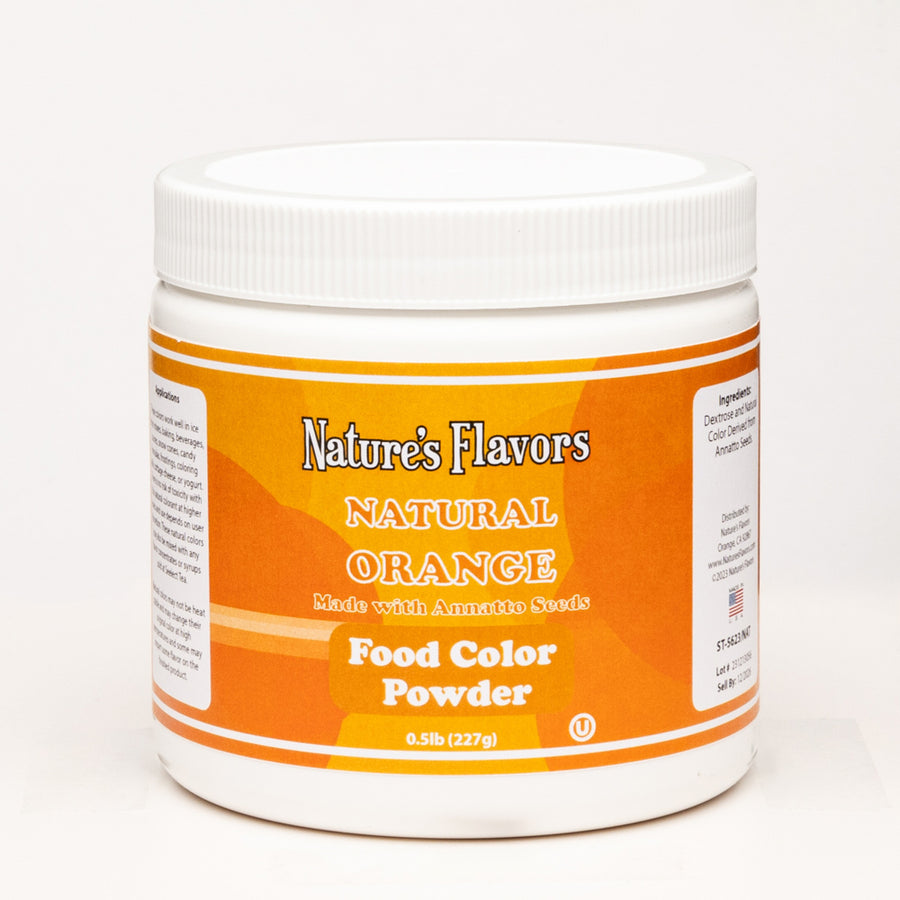
Dextrose and Natural Color Derived from Annatto Seeds.

Orange Food Coloring Powder, Natural made with Annatto Seeds Introducing our Orange Food Coloring Powder, a natural and vibrant solution for all your culinary coloring needs. Made from high-quality annatto seeds, this food coloring powder offers a rich, warm orange hue that is perfect for a variety of applications. Annatto seeds are renowned for their natural coloring properties and have been used for centuries in traditional cooking. Our product is crafted to provide a safe, natural alternative to synthetic food colorings, ensuring that your dishes not only look appealing but are also free from artificial additives. This bulk offering is ideal for professional kitchens, bakeries, and food manufacturers who require consistent and reliable color in their products. The powder is easy to use, dissolves quickly, and provides a uniform color that enhances the visual appeal of your culinary creations.

Applications: Our Orange Food Coloring Powder is versatile and can be used in a wide range of culinary applications. Simply add the desired amount to your recipes to achieve the perfect shade of orange.

Ingredients: The primary ingredient in our Orange Food Coloring Powder is annatto seeds, which are carefully selected and processed to retain their natural coloring properties. Annatto is a natural pigment derived from the seeds of the achiote tree, known for its vibrant color and mild flavor. This product does NOT contain any artificial dyes, preservatives, or allergens, making it a safe choice for those with dietary restrictions or preferences for natural ingredients.

Benefit: Using our Orange Food Coloring Powder offers numerous benefits. It provides a natural and safe alternative to synthetic dyes, reducing the risk of adverse reactions associated with artificial colorings. The powder is highly concentrated, allowing you to achieve the desired color intensity with minimal product usage. This not only ensures cost-effectiveness but also maintains the integrity of your recipes. Additionally, the natural origin of the coloring means it is suitable for a variety of dietary needs, including vegan and vegetarian diets.

Storage: To maintain the quality and effectiveness of the Orange Food Coloring Powder, it should be stored in a cool, dry place away from direct sunlight. Ensure the container is tightly sealed after each use to prevent moisture absorption and preserve the powder's potency. Proper storage will extend the shelf life of the product, allowing you to enjoy its benefits for an extended period.

Caution: While our Orange Food Coloring Powder is made from natural ingredients, it is important to use it as directed. Avoid inhaling the powder and ensure it is kept out of reach of children. If you have any known allergies to annatto or related substances, consult with a healthcare professional before use.

Food Coloring Product Applications: Food, beverage, desserts, baked goods, alcohol, mocktails, DIY craft projects

See our full Nature's Flavors product applications compatibility guide

Usage Levels - Food Coloring: Adjust to your liking

Learn more with our FAQs

Orange Food Coloring Powder, Natural made with Annatto Seeds

Size NF-5623/NAT-1/4lb

For larger sizes, please contact us.

* Eligible for reward points.

Price
Regular price $46.86
Regular price Sale price $46.86
Save
/

HURRY! FINAL SALE of the year ends in

DAYS
HOURS
MINUTES
SECONDS
Shipping calculated at checkout.

Discover our pure Orange Food Coloring Powder, crafted from organic annatto seeds. Free from artificial ingredients, additives, colors, and preservatives, it offers a vibrant hue and natural antioxidant benefits. Elevate your culinary creations with this wholesome, organic alternative to synthetic dyes.

Dextrose and Natural Color Derived from Annatto Seeds.

Orange Food Coloring Powder, Natural made with Annatto Seeds Introducing our Orange Food Coloring Powder, a natural and vibrant solution for all your culinary coloring needs. Made from high-quality annatto seeds, this food coloring powder offers a rich, warm orange hue that is perfect for a variety of applications. Annatto seeds are renowned for their natural coloring properties and have been used for centuries in traditional cooking. Our product is crafted to provide a safe, natural alternative to synthetic food colorings, ensuring that your dishes not only look appealing but are also free from artificial additives. This bulk offering is ideal for professional kitchens, bakeries, and food manufacturers who require consistent and reliable color in their products. The powder is easy to use, dissolves quickly, and provides a uniform color that enhances the visual appeal of your culinary creations.

Applications: Our Orange Food Coloring Powder is versatile and can be used in a wide range of culinary applications. Simply add the desired amount to your recipes to achieve the perfect shade of orange.

Ingredients: The primary ingredient in our Orange Food Coloring Powder is annatto seeds, which are carefully selected and processed to retain their natural coloring properties. Annatto is a natural pigment derived from the seeds of the achiote tree, known for its vibrant color and mild flavor. This product does NOT contain any artificial dyes, preservatives, or allergens, making it a safe choice for those with dietary restrictions or preferences for natural ingredients.

Benefit: Using our Orange Food Coloring Powder offers numerous benefits. It provides a natural and safe alternative to synthetic dyes, reducing the risk of adverse reactions associated with artificial colorings. The powder is highly concentrated, allowing you to achieve the desired color intensity with minimal product usage. This not only ensures cost-effectiveness but also maintains the integrity of your recipes. Additionally, the natural origin of the coloring means it is suitable for a variety of dietary needs, including vegan and vegetarian diets.

Storage: To maintain the quality and effectiveness of the Orange Food Coloring Powder, it should be stored in a cool, dry place away from direct sunlight. Ensure the container is tightly sealed after each use to prevent moisture absorption and preserve the powder's potency. Proper storage will extend the shelf life of the product, allowing you to enjoy its benefits for an extended period.

Caution: While our Orange Food Coloring Powder is made from natural ingredients, it is important to use it as directed. Avoid inhaling the powder and ensure it is kept out of reach of children. If you have any known allergies to annatto or related substances, consult with a healthcare professional before use.

Food Coloring Product Applications: Food, beverage, desserts, baked goods, alcohol, mocktails, DIY craft projects

See our full Nature's Flavors product applications compatibility guide

Usage Levels - Food Coloring: Adjust to your liking

Learn more with our resource guides

The future of food coloring is natural

Bill Sabo, the “Flavor Guy," was recently featured on WORLD News Group's report on the artificial dye phase-out, explaining why timing is everything for food manufacturers. Reformulate with us and join the leaders creating safer, cleaner products.
Learn more →

Natural Food Coloring Alternatives

Get the guide

Discover the best natural alternatives to artificial food dyes

If you're a food or beverage manufacturer looking to reformulate with natural colors, our expert R&D team is ready to help. We're currently offering free R&D consultations to help you replace artificial colors with natural solutions.
Learn more →

FAQs

To achieve the best results with natural and organic colorings, add them after cooking or heating whenever possible to reduce heat exposure. Test different system conditions, as some pigments react to acidity or high temperatures, and try small trial sizes to find the ideal fit for your application. Use our concentrated natural and organic color powders or liquids for stronger, more stable hues that endure baking. Protect colors from light and oxygen by storing them in airtight, opaque containers and using them soon after opening. Finally, keep in mind that natural pigments may be less vibrant than synthetic dyes, but with proper selection and handling, their brightness and stability can be greatly enhanced.

It’s best to experiment with small batches to determine the ideal color concentration for your specific product. While adding more color can boost intensity, eventually the vibrancy may plateau and could impact flavor, texture, or appearance.

Several pigments perform exceptionally well in acidic environments despite usually altering the hue of some natural colors. Anthocyanins, found in ingredients like red cabbage and purple sweet potato, become more vibrant and shift toward red or pink, making them excellent for pickled or acidic preserves. Turmeric also stays bright yellow and relatively stable, while annatto retains its yellow-orange hue. In contrast, chlorophyll-based greens often turn olive or brown, and beet-derived betalains may fade. To ensure optimal results, test small batches under your product’s specific pH and processing conditions before scaling up.

Powdered colors are generally more concentrated and can deliver bolder, more vibrant results in baking. They're also easier to incorporate into dry mixes and batters. Liquid colors offer convenience and easier blending, but may be less concentrated. For maximum vibrancy in baked goods, start with powdered forms and add color late in the mixing process to minimize heat exposure.

Powdered forms are more concentrated, have a longer shelf life, and work well in dry applications since they don’t affect texture or moisture content. However, they may need thorough mixing to disperse evenly and can clump if not handled properly. Liquid colors, on the other hand, blend more easily. They are ideal for beverages and are convenient to measure, though they’re usually less concentrated. In general, choose powders for baking and dry mixes, and liquids for beverages or other applications where smooth blending is key.

Achieving a true natural black color is difficult, as most natural pigments tend to have red or purple undertones or produce a grayish or brown tint instead. The final shade is also influenced by factors such as pH levels and the composition of the base system.

Our natural food colors are not designed or intended for hair dye applications. While some plant-based pigments can temporarily stain hair, they cannot penetrate the hair cuticle to deposit color permanently like chemical dyes. Results will be limited and short-lived.

Yes, it’s possible, but results will vary depending on the fabric material. Powdered pigments can color natural fibers like cotton, silk, or wool when paired with a mordant or fixative such as salt, vinegar, or alum. Liquid colors tend to be less effective on fabric unless mixed with a binder. Synthetic materials like polyester or nylon generally don’t absorb natural dyes well. Overall, the coloration is usually temporary and most suitable for craft or decorative uses unless proper mordanting techniques are applied.

When using natural food coloring, make sure that you use it in small amounts and adjust if necessary. Certain pigments (i.e., turmeric, beet) can impart a flavor if used in higher amounts.

To extend the longevity of natural colors in bottled alcoholic beverages, protect them from light and heat by storing the bottles in a cool, dark place, ideally in opaque or dark-colored glass. Keep in mind that both pH and alcohol content can impact color stability—reds and purples, such as anthocyanins, are especially prone to fading. It’s best to test small batches first to evaluate how the color holds up over time.

Some of our pigments can be used in cosmetic applications like lip balm, lotion, or bath products, but they are formulated as food-grade ingredients. We recommend testing in your specific formulation first and verifying compatibility with skin or product pH.

Our natural color products remain shelf-stable for up to three years when stored in cool, dry conditions away from direct light and heat. Over time, some gradual fading or slight color shifts may occur, particularly if exposed to light, heat, or oxygen. To preserve maximum vibrancy, store the colors in airtight, opaque containers and keep them in a cool, dark location.

Looking to Reformulate from Artificial Colors to Natural Colors?